Stop if water is outside the toilet or the shutoff fails
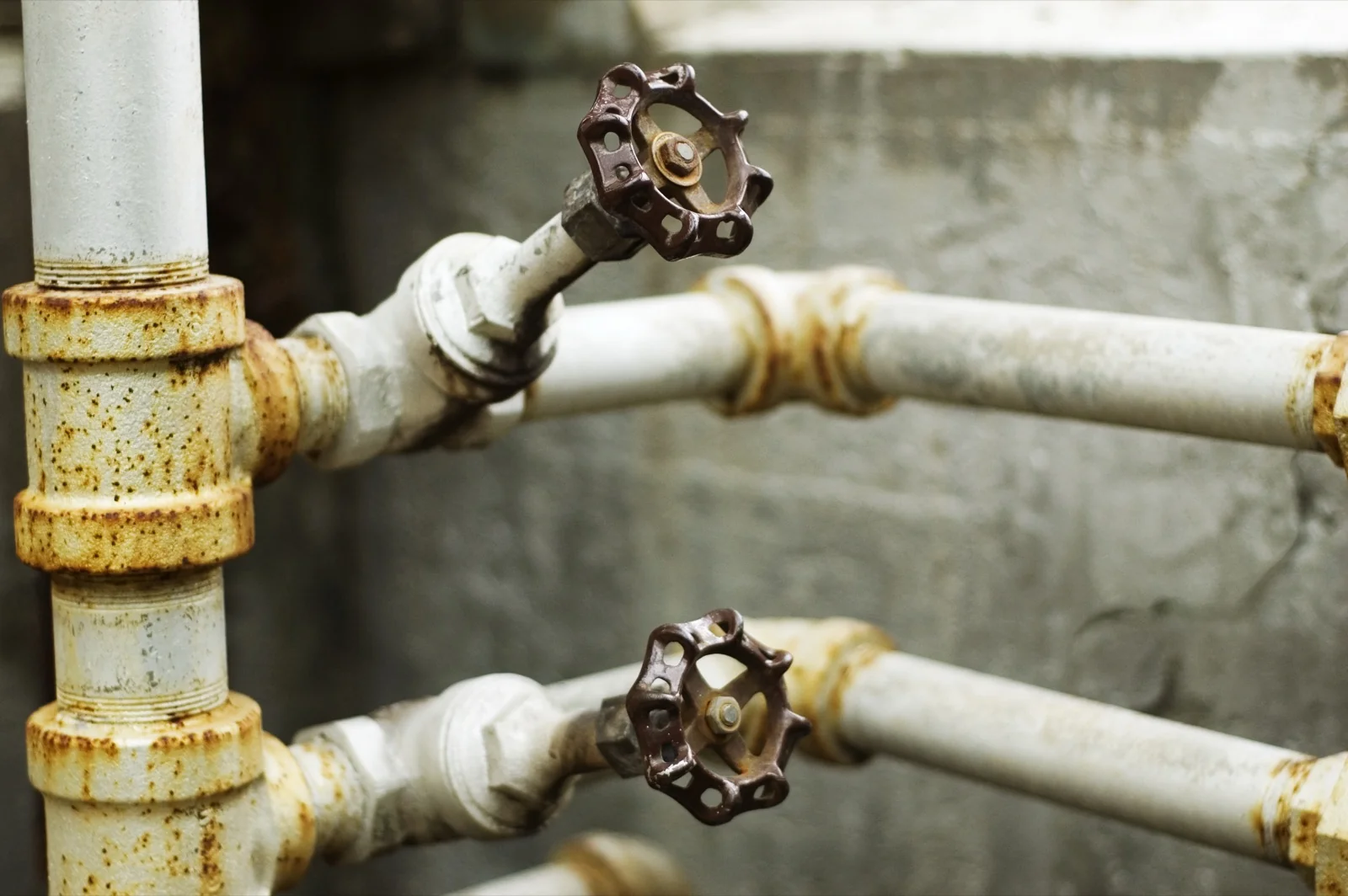
Before making repairs, confirm that you can shut off the toilet’s water supply reliably. If the shutoff valve is inaccessible, corroded or does not work, stop and have a plumber repair it.
Water beneath the bowl needs separate inspection. A poor seal at the floor connection is one possible cause; replacing the flapper will not repair that seal. Leave toilet removal, drain-flange work and tank disassembly to a plumber.
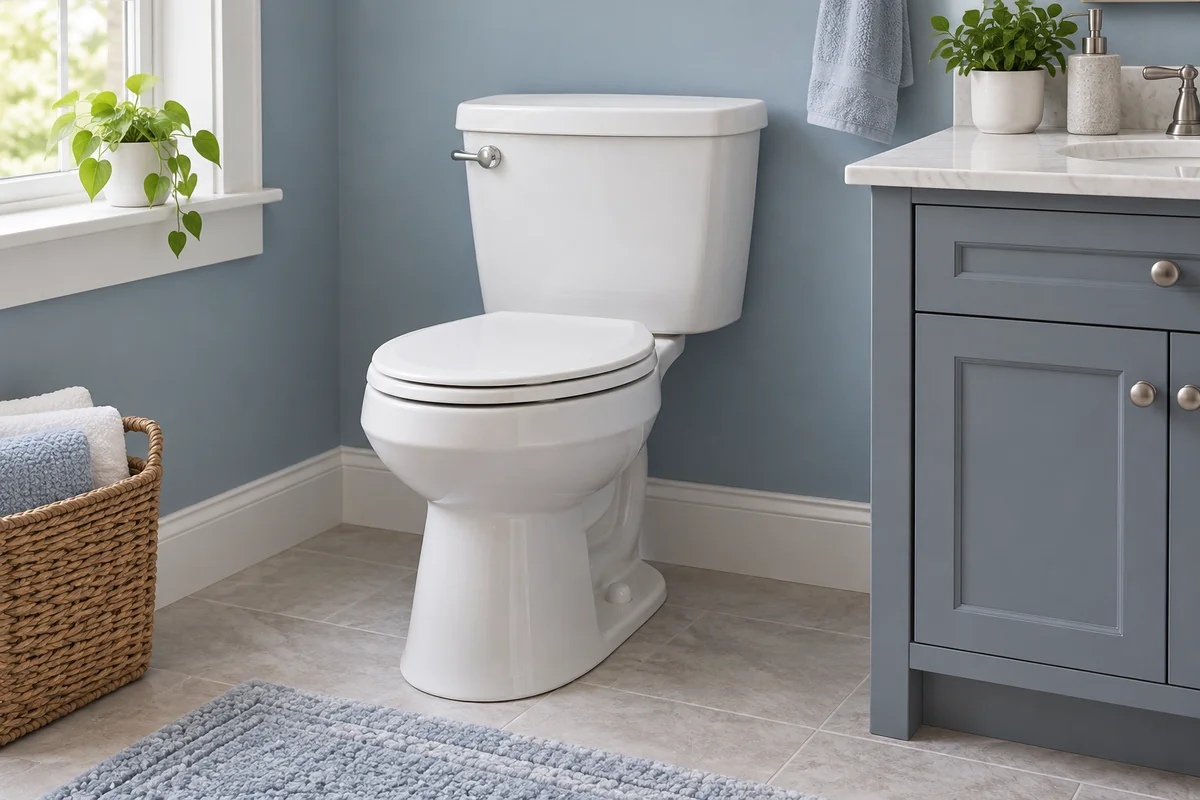
These checks cover a conventional tank toilet; match replacement parts and adjustment instructions to your model.
How to fix a running toilet: check simple causes first
Remove the tank lid and set it somewhere secure. Notice whether filling runs continuously or starts again between flushes. That distinction helps narrow the problem, but neither symptom alone identifies a failed part.
-
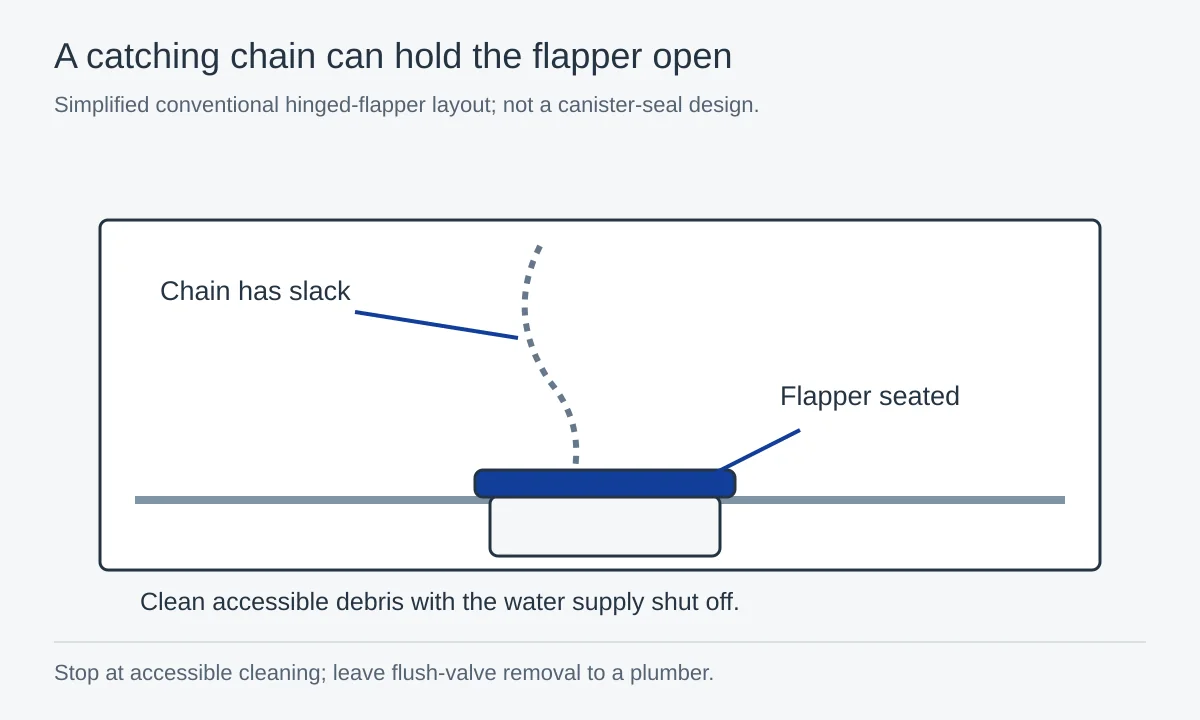
Check the handle and chain. Watch whether the handle returns after a flush. Look for a chain catching on another component or pulling the flapper off its seat. The flapper is the seal over the tank’s bottom opening. Clear an obvious obstruction and adjust the chain so the flapper rests fully closed. Leave enough slack to avoid pulling it open, without excess chain catching nearby. If the handle still sticks, it may need repair or replacement.
-
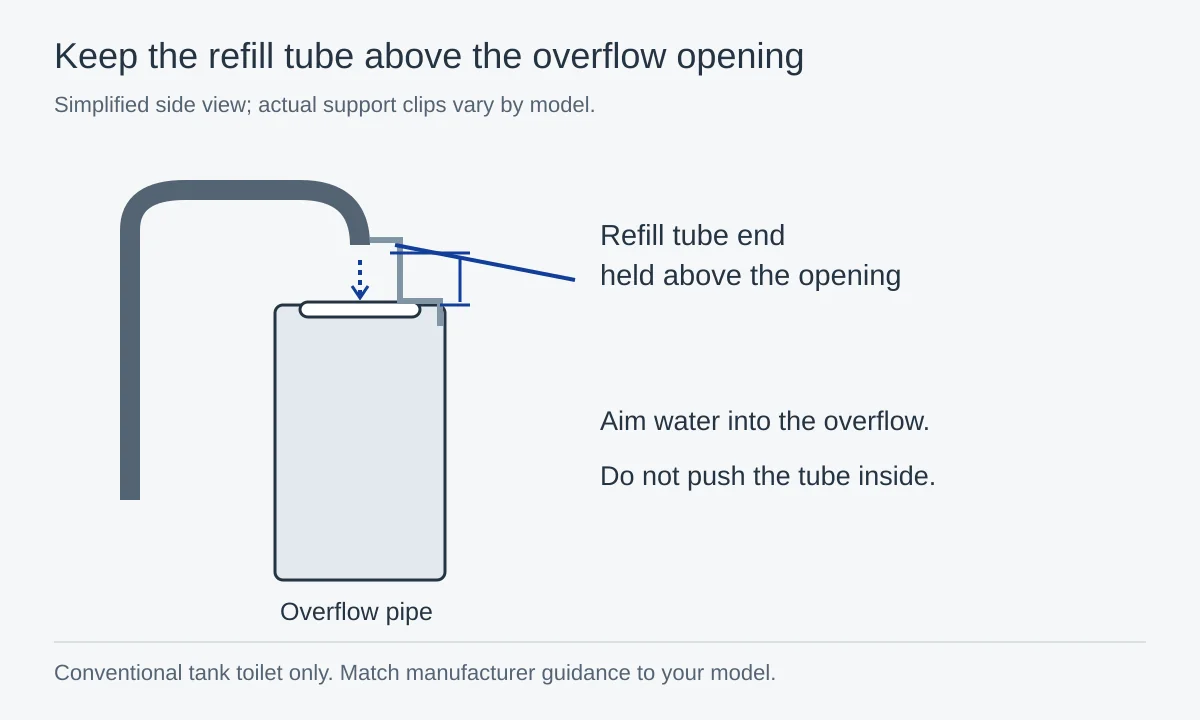
Reposition a submerged refill tube. Find the small tube that directs refill water into the upright overflow pipe. If its end extends down inside the pipe, secure it on its clip above the opening, aimed into the pipe. Do not leave it hanging away from the opening. A tube pushed inside can siphon water and cause repeated refilling, as Fluidmaster explains.
-
Clean accessible debris from the flapper and seat. Shut off the water supply before cleaning. Inspect the flapper for damage, then wipe debris from its underside and the surface it seals against. Let it settle fully closed, with no debris or caught chain holding it up. Stop at accessible cleaning; do not remove the flush-valve assembly.
-
Check the result after each change. Restore the water supply if you shut it off, then flush and watch the refill cycle. Filling should stop without water continuing into the overflow. Notice whether the tank starts refilling again between uses. If the symptom remains, use the observations below before buying parts.
Use what you see to choose the next action
| What you observe | What it may mean | What to do next |
|---|---|---|
| Water spills into the overflow, then eventually stops | The tank’s water level may be set too high | Check the water-level adjustment before buying a flapper |
| Water keeps entering the overflow and filling never stops | The fill valve may not be shutting off | Ask manufacturer support or a plumber about fill-valve troubleshooting |
| The toilet refills between flushes | Water may be escaping from the tank | Check the refill tube, chain and flapper first |
| Debris sits on the flapper or its sealing surface | The flapper may not seal fully | Wipe both surfaces and check again |
| The flapper is damaged or leaves heavy black residue | The rubber seal may be deteriorating | Identify a compatible replacement |
| Water appears beneath the bowl | There may be an external leak, including a floor-seal problem | Stop internal adjustments and arrange inspection |
KOHLER’s guidance distinguishes overflow that eventually stops from continuous running that can involve the fill valve. A running sound alone does not tell you to replace the flapper.
Check for water leaking into the bowl
Add a few drops of food coloring to the tank and leave the toilet unflushed. If color appears in the bowl, water is passing from the tank into the bowl, as described in TOTO’s FAQs.
This test shows that water is escaping into the bowl; it does not identify the failed component. Combine the result with what you saw at the refill tube, overflow and flapper.
Replace only the part the checks point to
Replace a visibly damaged or deteriorating flapper. If it still leaks after cleaning and correcting the chain and refill tube, a compatible replacement is a reasonable next step. Persistent leakage can also involve the flush valve or its gasket.
A canister-style mechanism uses a seal rather than a conventional hinged flapper. Identify which mechanism you have before ordering.
For a TOTO toilet, look for the tank identification on a sticker or ink marking inside the tank’s back wall. Numbers beneath the lid identify the lid itself.
If overflow continues or the basic checks do not resolve the problem, contact manufacturer support or a plumber. Leave fill-valve servicing and flush-valve removal outside these basic checks.
Tell the person helping you:
- Whether running is continuous or happens between flushes.
- Whether water enters the overflow.
- Whether dye appeared in the bowl.
- Which changes helped, even briefly.
- Whether the shutoff works and whether water is outside the toilet.
These observations help direct the next repair.
FAQ
Why does my toilet refill when nobody has flushed it?
Water may be escaping from the tank, triggering another refill. Check for a refill tube pushed into the overflow, a catching chain, or a dirty or worn flapper.
Where should the refill tube sit?
Secure it on a clip above the overflow pipe, directing water into the opening. Pushing it down inside the pipe can cause siphoning and repeated refilling.
Should I replace the flapper first?
Check the chain, refill tube and overflow first. Clean debris from the flapper and its seating surface. Replace a damaged flapper or one that continues leaking after those checks.
How can I check for a tank-to-bowl leak?
Add a few drops of food coloring to the tank and leave the toilet unflushed. Color appearing in the bowl confirms water is passing from the tank into the bowl, but does not identify the faulty part.
What if the toilet’s shutoff valve will not close?
Stop repair work. Have a plumber repair or replace the valve so the water supply can be shut off reliably.