Find the gap before choosing a seal
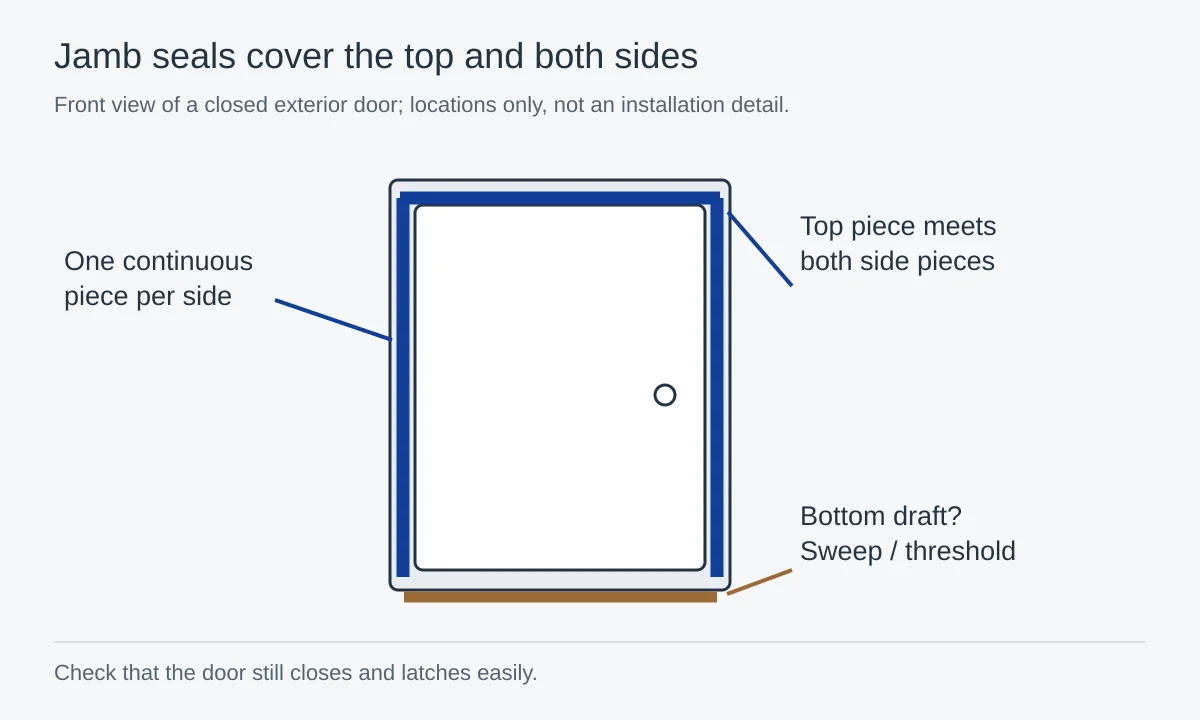
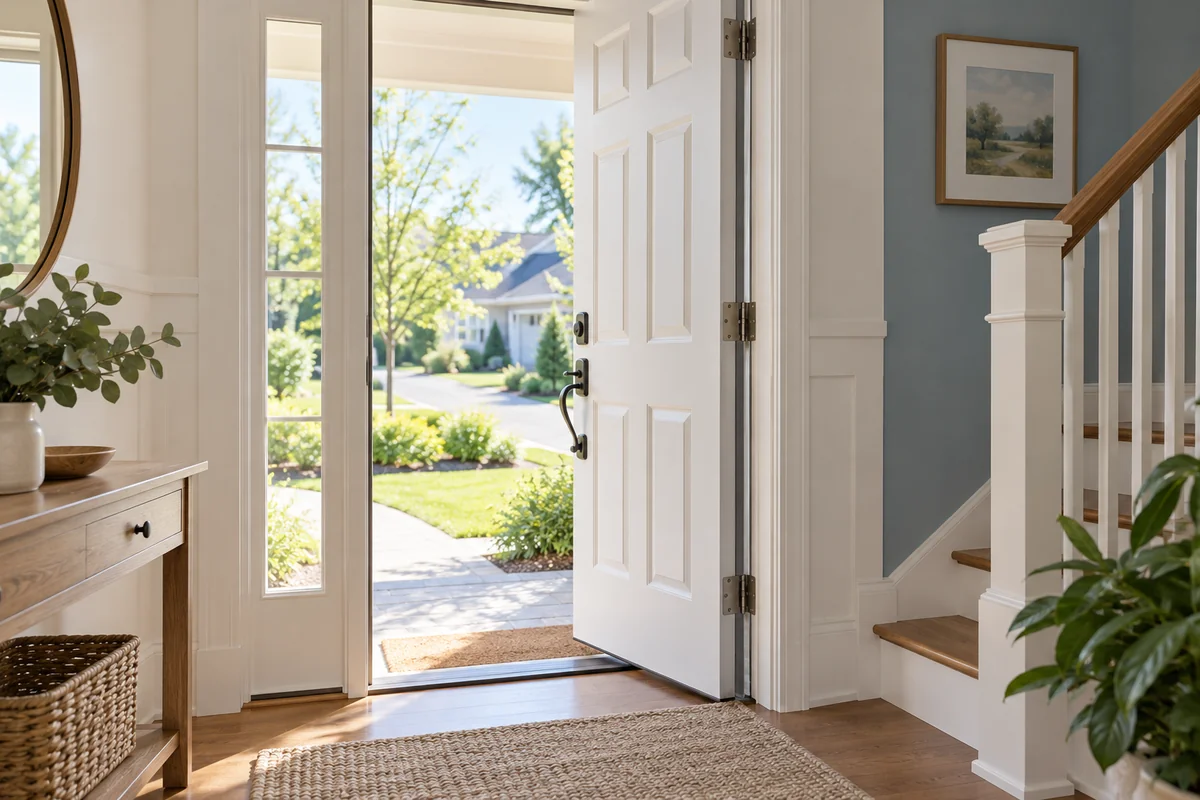
Close the door and look for daylight around its edges. Note whether the gap runs along a side, across the top, or underneath. A loose-fitting door can also indicate air leakage.
Match the material to the location:
- Sides or top: Weatherstripping seals the moving joint between the door and its frame.
- Underneath: Check the sweep and threshold. Choose a suitable replacement or have their fit assessed.
- A stationary crack: Caulk fills gaps between parts that do not move. Keep it out of the moving door joint.
These steps cover screw-fastened exterior-door jamb weatherstripping with supplied short screws and caulk behind the fastening holes.
Check the door and know when to stop
Open and close the door before adding anything. Address loose hinges, knobs, or strike plates first. If the hardware or wood cannot hold screws securely, stop and arrange a door repair.
The door should operate smoothly before you fit the seal. If it already binds, feels unsafe, or cannot close properly, have the underlying problem assessed.
Clean the contact surfaces and let them dry. New York State HCR recommends applying weatherstripping above 20°F (-7°C). Check the selected seal and caulk labels for their application limits.
Do not block needed ventilation. If you are unsure whether an opening provides ventilation, ask a qualified ventilation professional before sealing it.
How to install door weatherstripping step by step
Fit the side and top strips as a continuous seal around the jamb. Check their position before fastening so the added material does not interfere with closing.
-
Measure and cut. Measure each side and the top twice before cutting. Cut a single piece for each side and another for the top. Each piece should cover its intended length without gaps.
-
Fit the corners. Position the pieces so their ends meet tightly. Notch the side-piece ends where needed to meet the top piece, unless suitable notches are already provided. Check for openings at both corners.
-
Position the seal. Seat the strip against the frame so its sealing edge contacts the closed door. The seal should compress without making closure difficult. Adjust its position if the door binds.
-
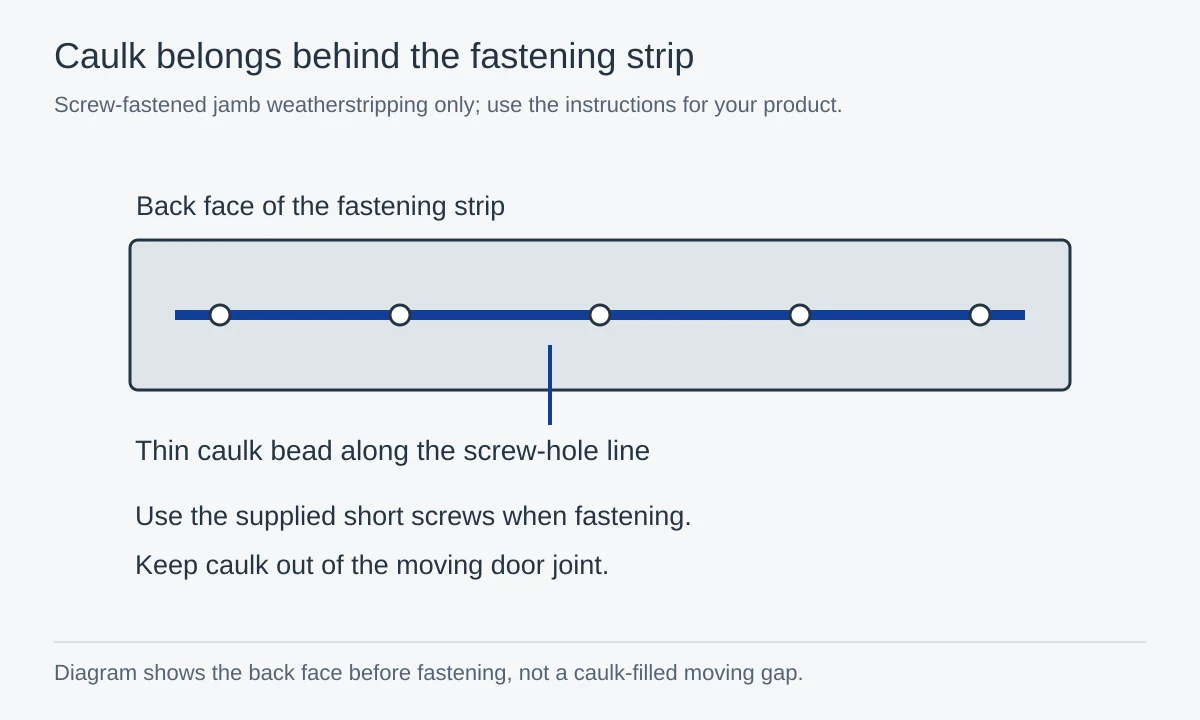
Caulk behind the fastening holes. Apply a thin bead of caulk to the back of the strip along the screw-hole line. Keep caulk out of the moving joint.
-
Fasten securely. Place the strip in position and attach it with the supplied short screws. Stop if the screws cannot hold the strip securely.
-
Check closing and latching. Open and close the door, then check that it latches smoothly. Adjust any strip that interferes and check again. Do not force the door shut; stop if adjustment cannot restore smooth operation.
Check the fit and act on what you find
Look around the closed door again. The location of a remaining gap helps identify the next step.
| What you notice | What it may mean | What to do |
|---|---|---|
| Daylight along a side or the top | The seal leaves a gap | Reposition that strip and check contact again. |
| An opening where strips meet | The corner fit is incomplete | Refit the ends so they meet tightly. |
| Closing or latching became harder | The seal’s thickness or position interferes | Adjust the fit. Stop if the door still does not operate smoothly. |
| A draft remains only underneath | The sweep or threshold needs attention | Assess the bottom assembly separately or have a door professional check its fit. |
Visible gaps and easy latching help you assess the fit. They cannot confirm that all air leakage has stopped.
When to get help with the door
Ask a door repair professional to inspect hardware attachment, jamb condition, and alignment if screws will not hold or the door binds.
If the new seal makes closing difficult despite adjustment, stop the installation. Have its thickness and placement checked. For a bottom draft, show where it occurs and request a sweep-and-threshold assessment.
Resolve any uncertainty about needed ventilation before sealing the opening.
Frequently asked questions
Will jamb weatherstripping stop a draft under the door?
No. It seals the sides and top. A bottom gap needs attention to the sweep or threshold.
How tight should the seal be?
It should compress against the closed door while allowing easy closing and latching. Adjust the fit if the door becomes hard to close.
Can I use short scraps along the jamb?
Use a single continuous piece along each side. Join the side and top pieces tightly at the corners.
Where does the caulk go?
For this screw-fastened type, apply a thin bead behind the strip along the screw-hole line. Keep it out of the moving door joint.
Should I fix loose hardware first?
Yes. Secure loose hinges, knobs, or strike plates before fitting the seal. Get help if the hardware cannot be secured or the door still binds.